
The Lighting Decisions That Change Everything
Three mistakes that cost agents offers, and the specific decisions that fix them before the shutter opens.
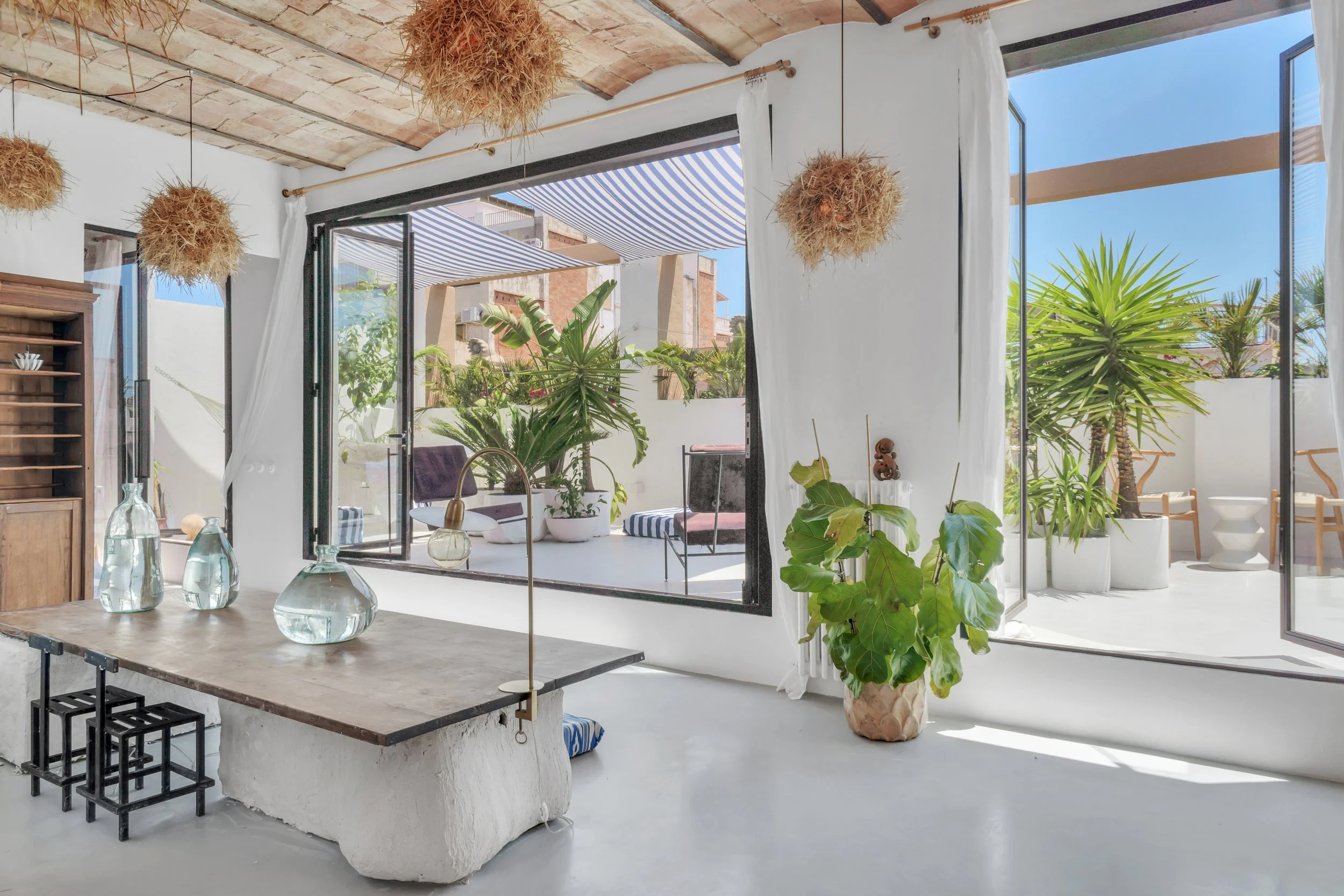
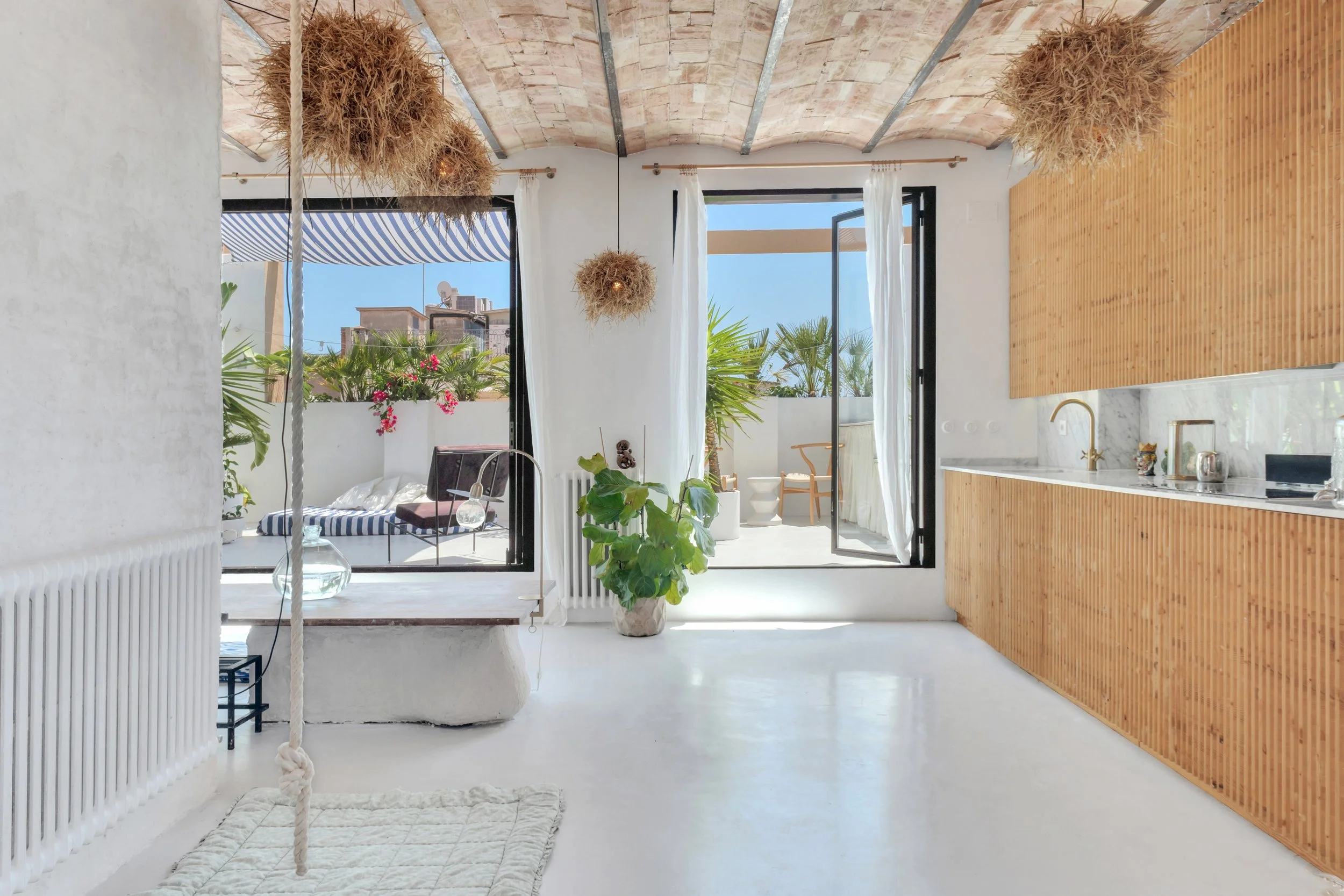
The image above was not an accident. Every window is open. Every shadow is intentional. The terrace beyond the glass is as sharp and warm as the room in front of it. That is a lighting decision , and it is the difference between a listing that books viewings and one that doesn't.
Lighting is the most discussed and least understood aspect of professional real estate photography. Every agent knows it matters. Very few understand why a near-identical room -same size, same furniture, same time of day- produces a completely different emotional response depending on how the photographer handles the light.
At H5 Property, we've spent years studying what separates images that move buyers to action from images that simply document a space. The answer, consistently, comes down to three lighting decisions. This post breaks each of them down, what goes wrong, why it matters commercially, and precisely how to fix it.

1. Window Exposure — Balanced
The glass doors and windows are fully exposed; the terrace, sky, and plants beyond are crisp and detailed. No blown highlights. The exterior exists as a continuation of the interior story, not a white void.
2. Colour Temperature — Unified
The warm honey tones of the exposed wood ceiling and the cool white walls and floor co-exist without conflict. The image feels coherent because no single light source is fighting another for dominance.
3. Controlled Shadow — Depth Preserved
Shadows fall naturally under the concrete table and along the floor. They are not eliminated. They create dimension, scale, and the sense that this is a real, three-dimensional space, not a flat render.
4. Interior-to-Exterior Narrative
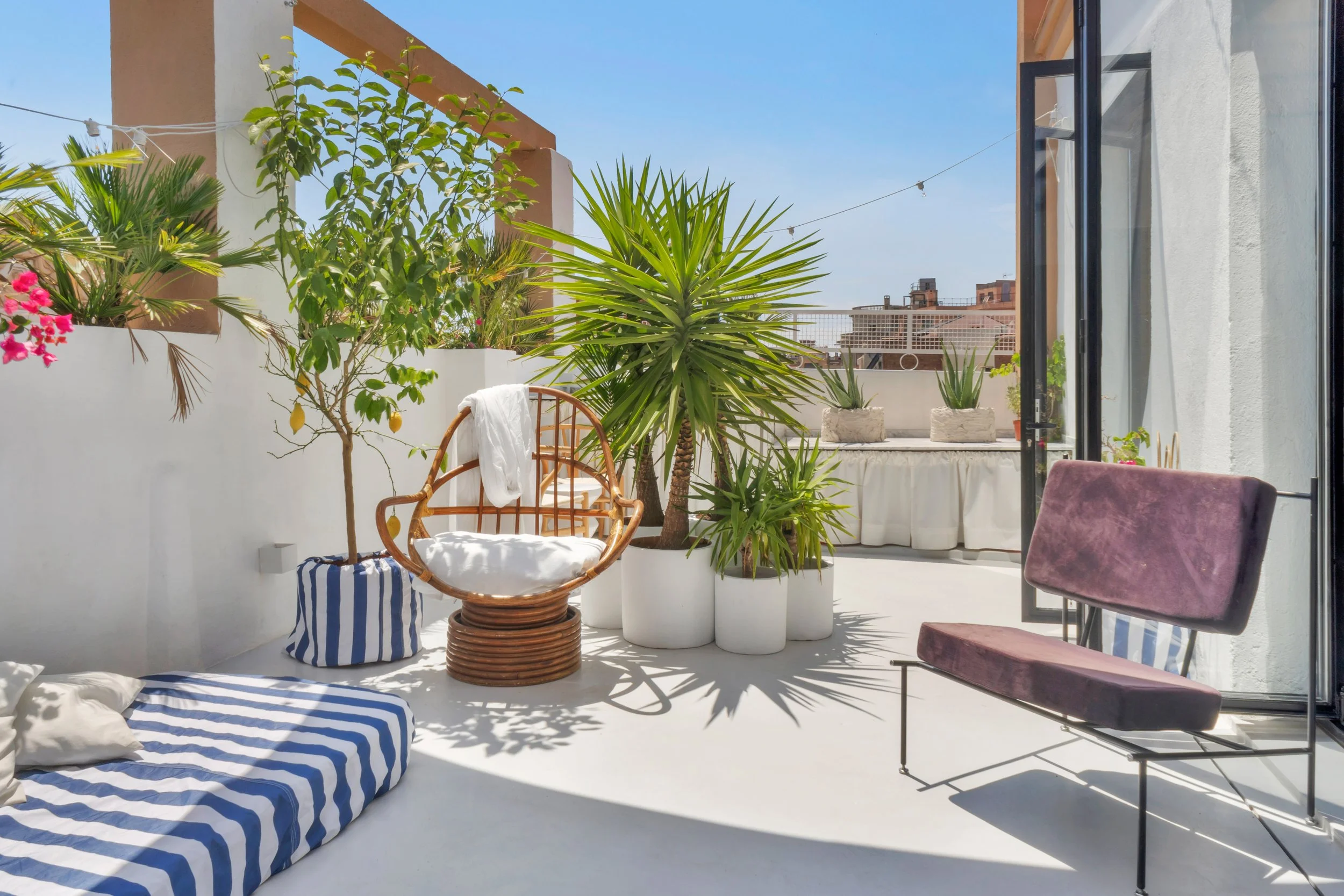
The right-hand window opens onto a private terrace with mature palms and white-rendered walls. The light treatment connects inside and outside seamlessly, extending the perceived size and lifestyle promise of the property.
This image works because the photographer made four correct decisions before pressing the shutter. None of them are post-production tricks. All of them are choices made in the room, with the light as it was. That is what separates a real estate image from a real estate photograph.
What Goes Wrong, and Why It Costs Offers
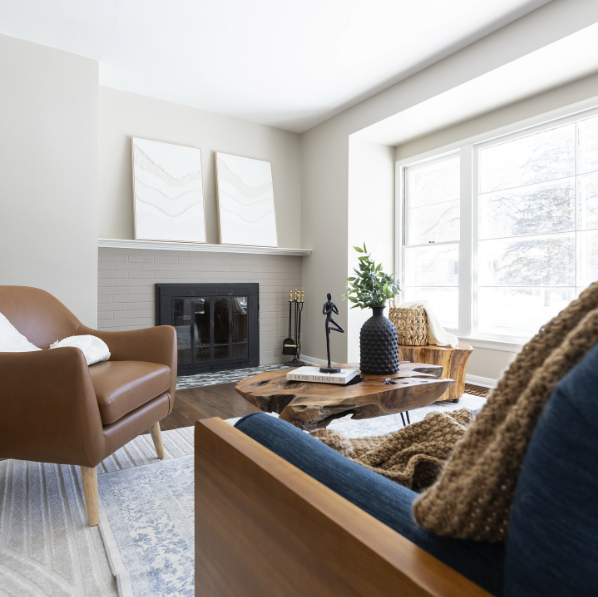
Blown Windows — The Subconscious Trust Killer
When the interior is exposed correctly and the windows become entirely white, buyers register something is being hidden — even if they cannot articulate it. The view, the connection to the outside, the sense of light source: all gone. What replaces them is a white rectangle that communicates one thing: the photographer prioritised technical convenience over the property's best interests.
In the image above, every window is open and fully exposed. The terrace beyond is a feature, possibly the most desirable feature of this property. Blowing those windows would have erased it entirely from the visual narrative.
The fix: Ambient bracketing in-camera, combined with targeted flash to lift the interior — not to replace the daylight, but to meet it. The window is then composited or blended so both interior and exterior sit at their natural exposure. This happens before the shoot is planned, not after it is edited.
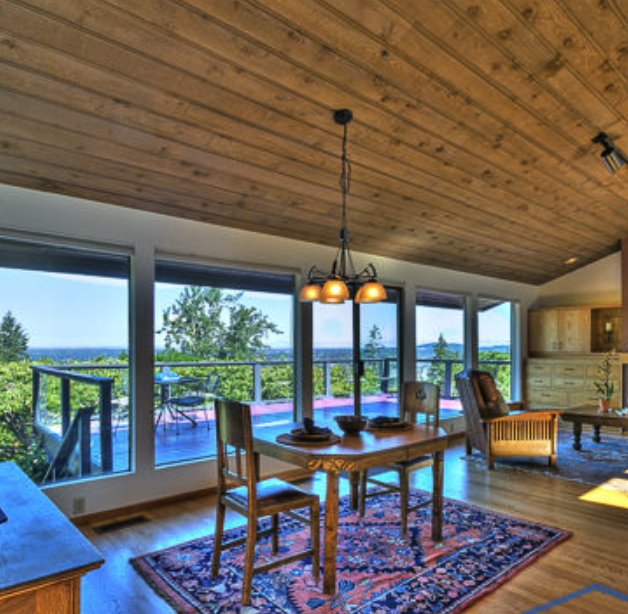
Colour Temperature Conflict — The Invisible Discomfort
Incandescent and halogen lamps emit warm, orange-toned light around 2700–3000K. Mediterranean daylight on a clear afternoon sits at 5500–6500K — cool, blue-white, and directional. When both are present in the same frame without correction, the result is an image that creates discomfort before the buyer can identify why.
The Barcelona interior above combines warm wood tones, crisp white walls, and full Mediterranean daylight. It reads as coherent because no single source is fighting another. The organic pendant lights, the ceiling grain, the glass vases — all sit in the same tonal world.
The fix: Match the colour temperature of any flash or supplementary lighting to the dominant ambient source before shooting. In daylight-dominant interiors, dial flash to 5500K and remove warm-toned artificial lighting where possible. In evening shoots, do the reverse.
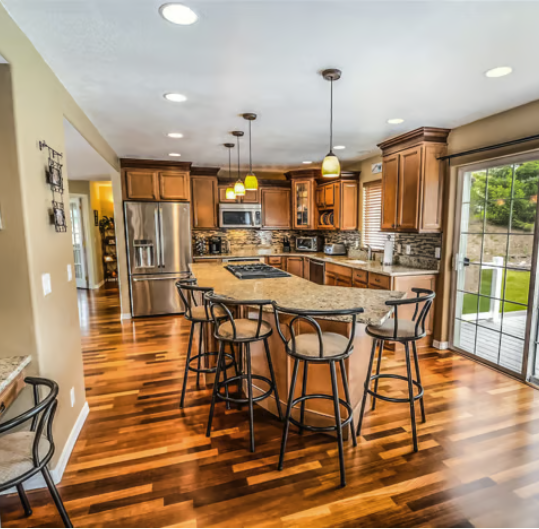
Over-Processed HDR — The Quality Signal Nobody Misses
Aggressive HDR processing — the kind that eliminates every shadow, saturates every surface, and produces images that look more like digital paintings than rooms — is immediately readable to anyone with design literacy. It signals that the original capture was insufficient, that something needed rescuing in post, that the property or the photographer or both had something to hide.
The shadows beneath the concrete table in the image above are still there. The light across the polished floor still has direction. That dimensionality is not a flaw to be corrected — it is evidence of a real space with real character.
The fix: Treat HDR as a last resort, not a workflow. Use it only to recover a specific problem — a single window, a particularly dark corner — never as a global processing style. Preserve shadow. Shadow communicates depth, and depth communicates credibility.
“Great lighting in real estate photography should be invisible. The buyer shouldn’t think about the light — they should think about the room. And then they should want to stand in it.”
Why This Matters More in Spring
Spring is the most competitive listing period in both the US and Norwegian markets. More properties go live simultaneously. Buyers have more choice. The threshold for what earns a viewing booking rises sharply.
In spring market conditions, a listing with mediocre photography doesn't just underperform, it actively harms the agent's reputation. Vendors compare. They see neighbouring properties presented with obvious professional care and ask why their own listing received less. Photography quality is increasingly the first metric by which vendors evaluate an agent's seriousness before they even call.
The properties that win spring market 2026 will be the ones where every image communicates confidence, in the property, in the agent, and in the quality of service the buyer can expect from both. Lighting is not a detail. It is the first and most persistent impression.



Ready to Elevate Your Spring Listings?
H5 Property photographers are available across New York, Norway, and Barcelona. Spring availability is filling fast!
Book now to secure your preferred shoot dates.
